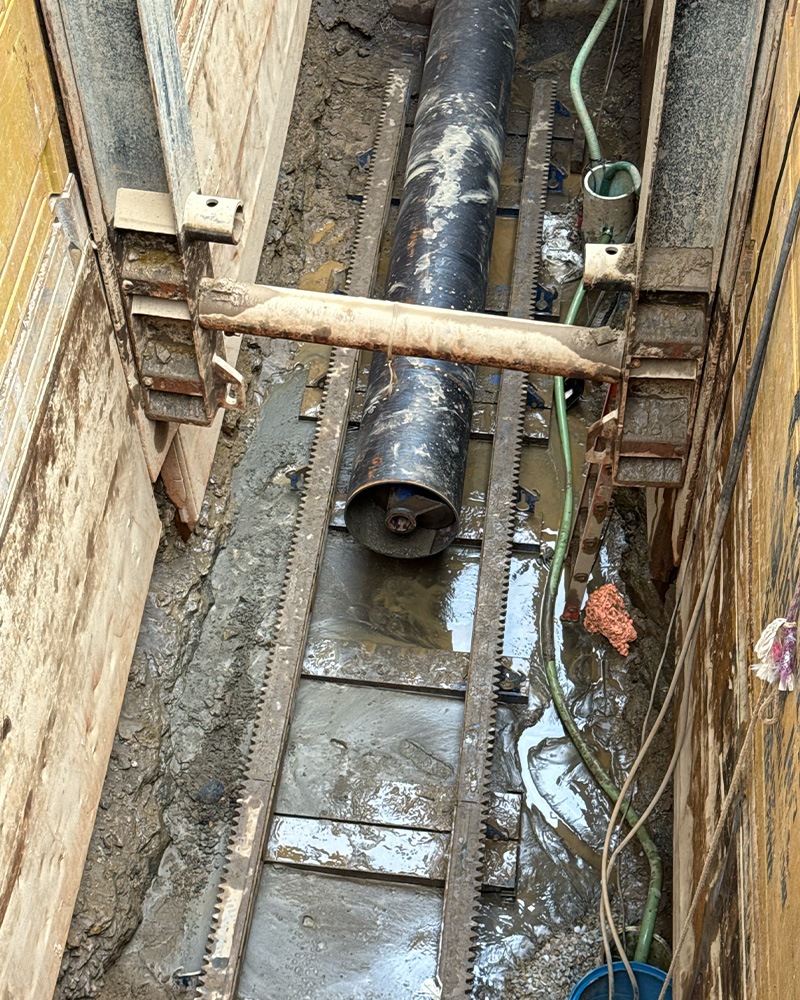
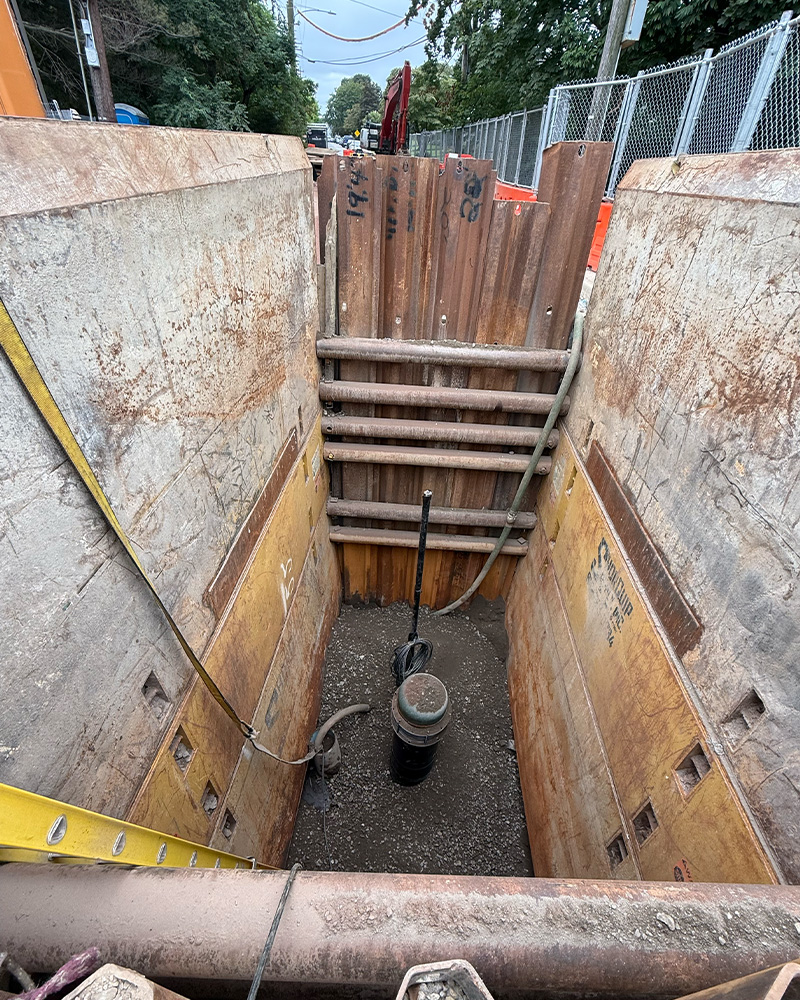
Installation of (1) 24 inch, 0.500” thick steel casing, approximately 130 feet in length, under Little Crum Creek
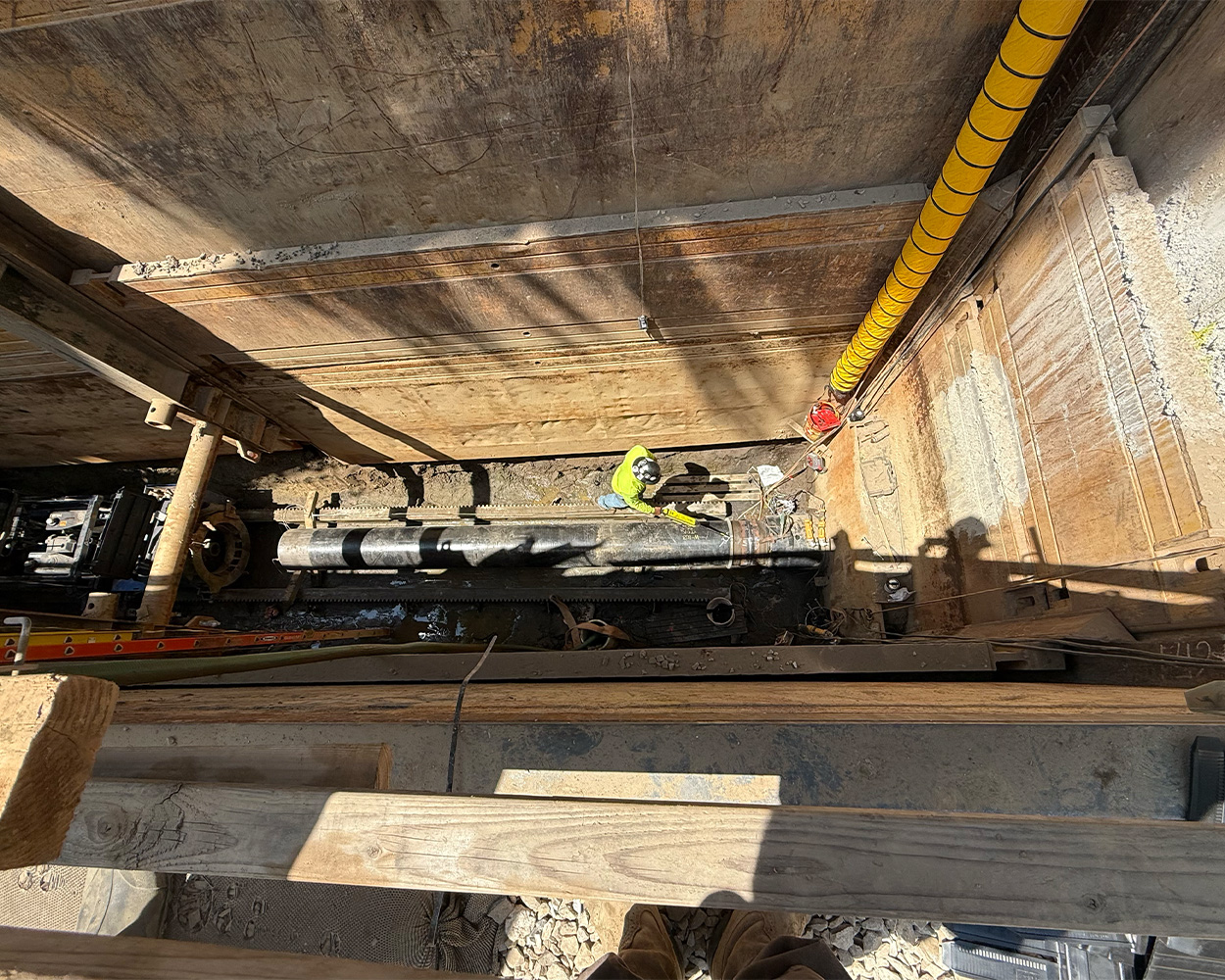
Melcar was contracted to install a 24”, 0.500” thick steel casing under Little Crum Creek as part of the ongoing efforts to upgrade the gas mains and services to all customers within Ridley Township, PA
Going into this job, crews knew in order to install the casing at the proper depth under the creek, launch and receive pits were going to have to be approximately 20- 25 feet deep, which requires specialized excavating equipment to reach proper depths as well as specialized shoring equipment to ensure that all pits are properly secured and protect all workers within. At those depths, especially when working in close proximity of an active creek, groundwater also becomes a major issue, which caused the crew to proactively increase the scale of dewatering efforts for this project to maintain a safe working level.
As work was just starting on site, the crew encountered multiple unmarked and unclaimed underground utilities, with which the Melcar team spent countless hours notifying all parties involved to find the proper owners and to properly relocate all existing sewer and water lines to ensure safe project execution without interrupting any existing services to customers.
Once the crew had excavated through all the unexpected rock and installed all necessary shoring, boring efforts were able to begin and were proceeding flawlessly until a massive water intrusion occurred within the bore path and flowed through the bore path and back into the launch pit. Within seconds, water levels in the pit had reached 10 feet high. Due to all the extra safety measures on site, the crew was able to quickly exit the pit and get to safety before any additional incident.
Immediate steps were taken to stabilize the area and implement dewatering solutions to mitigate further disruption. The incident highlights the unpredictable nature of subsurface conditions and the importance of adaptive response strategies during deep excavations.
Prior to returning to work, all parties involved decided the safest way forward would be to divert the creek around the boring efforts until the casing was fully installed and could be fully sealed off prior to returning the creek to its normal condition. Once safely diverted, the crew was able to finally restart the bore and install the casing as originally designed, with some extra support as the annular space around the casing was grouted to prevent any water issues from the creek in the future.
While there were many lessons learned on this job, it can be used as a prime example showing that no matter how thorough the planning phase is, working underground always carries a degree of unpredictability. Subsurface conditions can vary dramatically, and not all factors can be fully accounted for in advance, like unexpected water levels, changes in ground conditions, or hidden utilities. Even with the best engineering and safety measures in place, underground work often demands real-time adjustments and rapid problem-solving. It’s a reminder that experience, adaptability, and quick thinking are just as critical as preparation, all of which Melcar has proven time and time again that we are ready for any challenge.